Your Parents’ Unhealed Wounds Are Sitting in Your Relationship
Hmm….
This is a wellness wake up call. Please stay with me….
You flinch when your partner raises their voice, even a little. You keep score of every slight because “if I no protect myself, nobody go protect me.”
You can’t say “I need you” out loud, so you say it through malice, or through a fight about something else entirely.
Your partner pulls away for a day, and your mind goes straight to: of course, everybody leaves eventually.
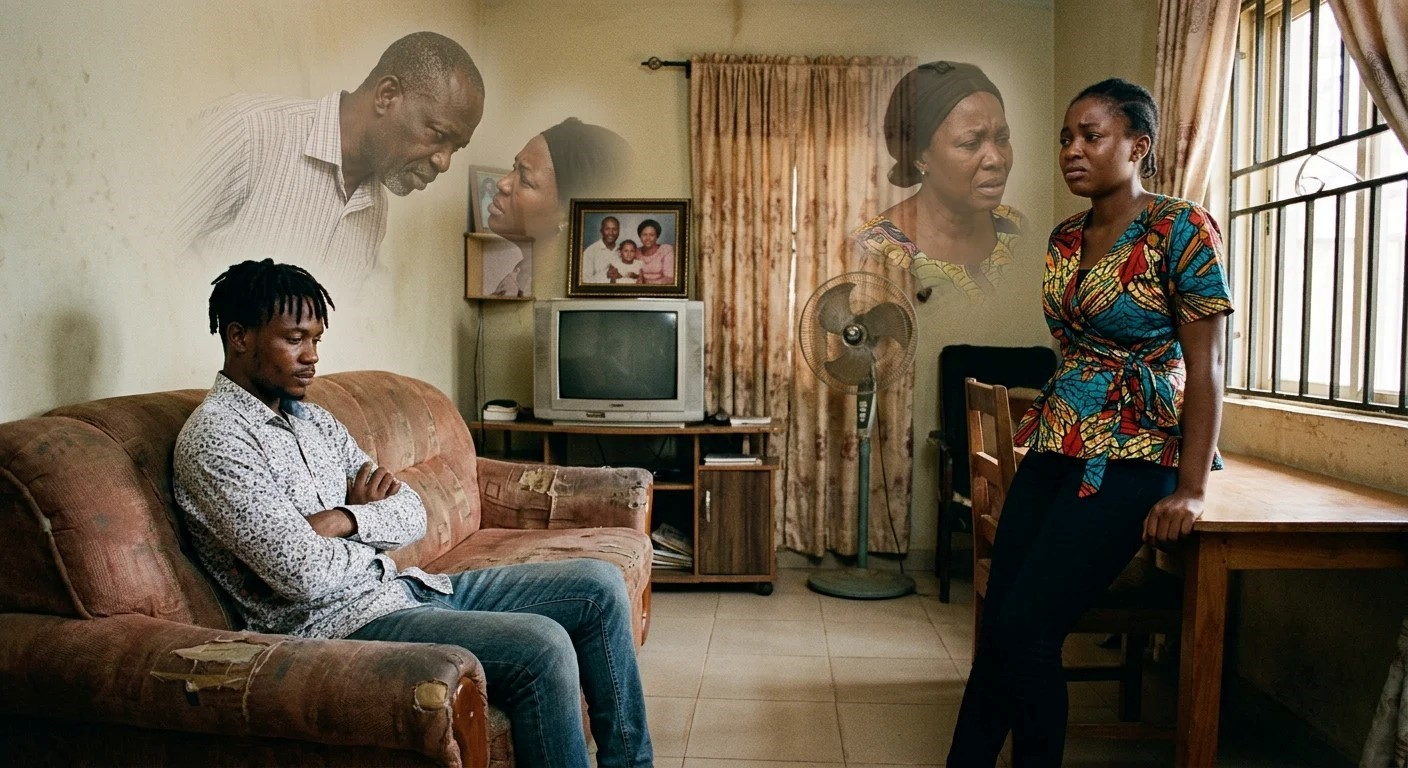
None of that started with your partner. Much of it started before you were even born, in a house you may have grown up in, or one your parents grew up in.
Still with me?
Let me tell you what Generational trauma actually is…
Generational trauma is not a diagnosis, and it’s not destiny, it’s a pattern.
It’s what happens when pain that was never processed still gets passed down anyway, not through explanation but through habit: how conflict was handled in the house, how love was (or wasn’t) spoken, which emotions were allowed and which ones earned you a slap or a “shut up there.”
Many of our parents and grandparents carried real weight, civil war, displacement, poverty, loss, the discipline culture of “spare the rod,” the expectation that children are seen and not heard.
Many were never given room, or language, to process any of it. So, it came out sideways:
as strictness mistaken for love, as silence mistaken for strength, as “I am your parent, not your friend” instead of a conversation.
Children don’t inherit trauma through explanation. They absorb it by watching what the adults around them do under pressure, and then they carry it into their own relationships without knowing where it came from.
You didn’t choose any of these. But it’s showing up in your relationship whether you choose it or not.
Now, this is where it shows up….
Conflict feels like danger, not disagreement: If home meant unpredictable anger, or “if you offend me, I go beat you well well,” your body may treat a partner’s raised voice, or even their quiet mood as a threat, not as two people simply trying to sort something out.
Love and control get tangled together: If care in your family came wrapped in control, “I’m doing this because “I love you” said while overriding your choices, you might mistake a partner’s need for space as disrespect or read normal jealousy as proof of love.
Asking for what you need feels shameful: If children in your family weren’t expected to have needs, “when I was your age, nobody pampered me”, you may have learned to over-give, over function, or go mute instead of simply asking.
You brace for people to leave before they do: Some people push a partner away first, just to control when the loss happens, rather than sit in the uncertainty of waiting to find out.
None of these patterns mean something is wrong with you. They mean something happened before you — and it’s still speaking through you.
Here’s an unpopular opinion…
Naming it is NOT disrespecting your parents
This isn’t about dragging your parents to court. Most people pass down what was handed to them, many of our parents were doing the best they knew how, with wounds nobody ever sat them down to heal. Culturally, we’re often taught that questioning how we were raised is disrespect. But naming a pattern isn’t the same as condemning the people who gave it to you. It’s simply refusing to let it run silently through your own home.
The goal isn’t to put your family on trial. It’s to ask yourself honestly: is this reaction about what’s happening right now with my partner, or is it about something much older?
Do you know you can interrupt this pattern?
Stay with me a little bit, I’ll share how;
- Get curious before you react: Next time you feel a flood of fear, anger, or shutdown that seems bigger than the moment deserves, pause and ask: is this really about my partner, or does it feel like something from further back?
- Separate the old story from the current relationship: Your partner not picking up your call isn’t the same as being abandoned. Even just naming that difference to yourself can slow down the automatic reaction.
- Practice saying the need, not the symptom: Instead of starting a quarrel when you feel unseen, try the harder sentence: “I need to feel like I matter to you right now.”
- Let your partner in on the pattern: “When you raise your voice, something in me shuts down, it’s not fully about you” gives your partner context instead of leaving them to guess.
- Consider talking to a therapist or counselor: Patterns built over a lifetime, and often over generations, rarely unwind through prayer, willpower, or “just leave it with God” alone, though those can absolutely be part of your process. A trained professional can help you separate the old wound from the present-day relationship. Therapy is not “for mad people”, it’s simply support, and more Nigerians are seeking it out every year.
I want you to understand something vital. It is You didn’t create these patterns, but you’re the one holding the pen now. Breaking a cycle doesn’t mean the old fear never visits again, it means you stop handing it to the people you love without realizing you’re doing it. Every time you pause instead of reacting, you’re doing something your own upbringing may never have modeled for you, which is choosing, on purpose, what gets passed down to the next generation.If this brought up anything difficult for you, please know that support is available, a therapist can help you work through generational patterns in a way that fits your story